Best Ceramic Apron for Students: WZMPA Leads

A ranked comparison of six ceramic aprons for students, weighing coverage, pockets, split-leg mobility and wipe-clean fabric against classroom realities.

By Zaria JarvisUpdated 16 min read
On this page
- Who this guide is not for
- Best ceramic apron for students at a glance
- How I narrowed six ceramic aprons from a crowded field
- Split leg or full skirt: which one belongs in a student studio?
- 1. WZMPA Pottery Maker Apron — Best overall
- 2. Potterhyme Waterproof Pottery Apron — Runner-up
- 3. KITCHIEF Pottery Apron Split Leg — Best minimal setup
- 4. Molaxhome Split Pottery Apron — Best upgrade
- 5. Nanxson Pottery Apron Split Leg — Best for pros
- 6. Potterhyme Cotton Canvas Split Leg Smock — Best premium
- How many pockets does a beginner actually need?
- What the listings do not tell you about student use
- WZMPA vs Potterhyme Waterproof: which wins at the wheel?
- The verdict
- FAQ
The best ceramic apron for students is the WZMPA Pottery Maker Apron, a 28.34 by 26.77 inch waterproof and oil-proof cover with an adjustable neck strap and pockets, and the cheapest of the six here. If you throw on a wheel and your thighs get soaked, the Potterhyme Waterproof Pottery Apron swaps the skirt for a 47 by 30 inch split-leg polyester shell and adds a 6-month warranty.
Who this guide is not for
If you are a professional production potter throwing eight hours a day, none of these six will replace a purpose-made studio smock with reinforced knees and industrial laundry tolerances. Look at leatherwork aprons or dedicated studio suppliers instead.
If you never actually touch clay and just want a cute gift, a graphic cotton apron from any homeware store will do. The picks here earn their place because they handle slip, glaze splatter, and the wet-thigh problem that every ceramic student meets in week two.
And if your program supplies aprons, check the fit before you buy. Some studios issue heavy canvas smocks that already cover most of what a mid-tier pick offers here, in which case the money is better spent on tools.
The rest of this guide assumes you are a student who needs one apron to survive a semester of handbuilding, wheelwork, glazing, and cleanup, without swapping garments between stations.
Best ceramic apron for students at a glance
| Pick | Coverage | Pockets | Price |
|---|---|---|---|
Best overall WZMPA Pottery Maker Apron |
28.34 x 26.77 in skirt | Pockets (count not listed) | Check Price |
Runner-up Potterhyme Waterproof Pottery Apron |
47 x 30 in, split leg | 3 chest pockets | Check Price |
Best minimal setup KITCHIEF Pottery Apron Split Leg |
Split leg, cross-back | 2 pockets | Check Price |
Best upgrade Molaxhome Split Pottery Apron |
41.3 x 30.3 in, split leg | 3 pockets | Check Price |
Best for pros Nanxson Pottery Apron Split Leg |
39.37 x 29.92 in, split leg | 1 chest + 2 side | Check Price |
Best premium Potterhyme Cotton Canvas Split Leg Smock |
Split leg, full body | 3 chest + 2 hip | Check Price |




How I narrowed six ceramic aprons from a crowded field
I disqualified three kinds of listing before ranking anything.
First, I cut aprons that made no mention of pottery, ceramics, or clay in their listing detail. A generic waxed canvas apron for a barista is not a ceramic apron for students, whatever the photos suggest.
Second, I cut anything without an adjustable neck or waist. Ceramics classes span a wide range of body sizes and heights, and a fixed-strap smock rules out too many buyers. Every one of the six here lists adjustable straps or one-size-fits-most sizing.
Third, I cut listings with no stated coverage dimensions or fabric type. A "large" apron with no inches is a gamble. Five of the six here publish measurements in inches, and the sixth publishes them in centimetres with an inch conversion.
What survived split cleanly into two shapes: the traditional bib-and-skirt (WZMPA) and the split-leg smock (the other five). That shape difference is the decision this guide really turns on, so the next section takes it head-on.
Split leg or full skirt: which one belongs in a student studio?
Most ceramic apron guides compare fabric weight first. That is not what decides it. The shape of the lower half is.
A traditional skirt covers your front thighs when you stand. It stops covering them the moment you sit at a wheel and open your knees to bracket the wheelhead. Slip runs down the inside of the skirt onto your jeans. The best ceramic apron for students in a wheelwork-heavy class is one that solves that problem.
A split-leg design fixes it. The bottom half divides into two panels with leg straps, so each panel wraps a thigh and stays wrapped when you sit. Five of the six picks here use it: KITCHIEF, Molaxhome, Nanxson, and both Potterhyme models.
The trade-off is that split-leg smocks feel more like workwear and less like a kitchen apron. They take a moment longer to put on, because you buckle the leg straps as well as the neck and waist. If your class is mostly handbuilding at a bench, a skirt is faster and just as effective, which is why the WZMPA still wins overall for a general student.
The rule of thumb: if you spend more than half your studio time at a wheel, choose split-leg. Otherwise, a skirt is easier.
1. WZMPA Pottery Maker Apron — Best overall
A waterproof, oil-proof skirt apron that costs the least of any pick here and covers the bench-work majority of a ceramics course without fuss.
Best for: first-year students who need coverage without fuss Skip it if: you spend hours straddling the wheel
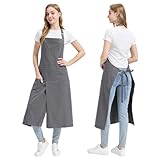
The WZMPA earns the top spot on the balance of price, coverage, and versatility. It measures 28.34 by 26.77 inches, which is enough skirt to cover most of your front from chest to mid-thigh, and it is the cheapest of the six. WZMPA says the fabric is thickened waterproof and oil-proof material with a soft feel, and the neck strap is adjustable for different body sizes. The listing describes it as suitable for cooking, baking, gardening, painting, and other tasks, which matters if your program mixes ceramics with other studio work in the same building.
The trade-off against the split-leg picks is real. This is a traditional bib and skirt, so wheelwork will let slip run inside your legs onto your jeans. For a student who mostly handbuilds and glazes, that is fine. For someone throwing every session, one of the split-leg picks below is a better match. The pocket count is not specified in the listing beyond "with pockets", which is the one detail the other picks publish more precisely.
Pros:
- Cheapest of the six here
- 28.34 x 26.77 in coverage published in inches
- Waterproof and oil-proof material per the listing
- Adjustable neck strap for different body sizes
- Doubles for cooking, painting and gardening
Cons:
- Skirt shape leaves inner thighs exposed at the wheel
- Pocket count not specified in the listing
- No weight or warranty published
2. Potterhyme Waterproof Pottery Apron — Runner-up
A split-leg polyester shell that is the only pick here published with both a 47 by 30 inch measurement and a stated warranty.

Best for: wheel-throwers who hate soggy jeans Skip it if: you want a natural cotton feel
The Potterhyme Waterproof is the pick I would choose for a wheelwork-heavy semester. It lists dimensions of 0.15 x 47 x 30 in, which makes it the longest published apron here, and Potterhyme describes the lined polyester as 100% waterproof. Split-leg construction plus that fabric is what your legs actually need when a session of centring throws slip across your lap. The listing includes three small tool or pen pockets on the chest, an adjustable neck strap, and leg straps to hold each panel in place while you move.
It is the only pick in the set with a published warranty: 6 months. That is a small thing that says something about how the maker expects the product to hold up. Where it loses to the Potterhyme cotton canvas premium pick further down is in feel. Waterproof polyester keeps slip out, but it does not breathe. In a warm studio you will notice. If your room runs cool and you throw a lot, that is a fair trade.
Pros:
- 47 x 30 in coverage, the largest published here
- 6-month warranty, the only one in this set
- Waterproof lined polyester per the listing
- Split-leg with leg straps for wheelwork
- Three chest tool pockets
Cons:
- Polyester breathes less than cotton canvas
- No hip pockets, unlike the premium Potterhyme
- Sits mid-range in this set on price
3. KITCHIEF Pottery Apron Split Leg — Best minimal setup
The second-cheapest pick here, with a cross-back strap and split-leg design that trades pocket count for simplicity.

Best for: students who just need coverage and one pocket Skip it if: you carry a phone, calipers and a sponge together
The KITCHIEF sits in the second price position here and keeps its promise simple: split-leg coverage with cross-back straps and two pockets. KITCHIEF describes the fabric as polyester that is heat-resistant, breathable, and easy to wash and dry, with a brass buckle for the removable strap. The cross-back is the detail worth calling out. A single neck loop puts all the weight of a wet apron on your cervical spine after an hour. Cross-back straps spread that load across the shoulders, which is why cafe workers and pottery instructors keep asking for them.
The trade-off against the mid-tier picks is pocket count. Two pockets is enough for a phone and a sponge, and not enough if you also want to carry a needle tool, calipers, and a small notebook. It also does not publish full apron dimensions in inches the way the Potterhyme, Molaxhome, and Nanxson listings do, so you are relying on the "adjustable" description rather than a specific measurement.
Pros:
- Second-cheapest of the six here
- Cross-back straps spread the load across shoulders
- Split-leg design suited to wheelwork
- Removable brass buckle strap
- Polyester listed as easy to wash and dry
Cons:
- Only two pockets
- Full apron dimensions not published in inches
- No warranty stated
4. Molaxhome Split Pottery Apron — Best upgrade
A cotton blend split-leg apron with three specified pockets and published inch measurements, sitting mid-range in price.
Best for: students moving up from a borrowed apron Skip it if: you want a waterproof shell
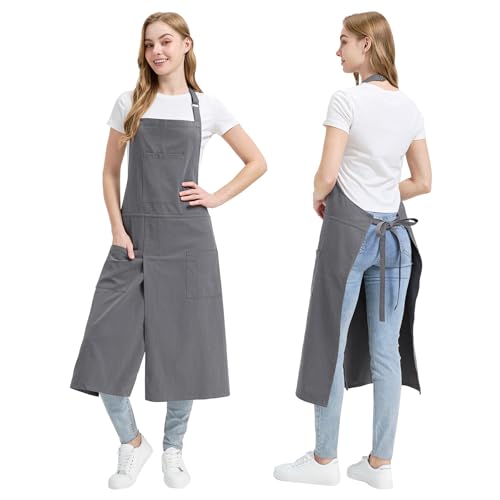
The Molaxhome is the sensible upgrade from the WZMPA if you have decided you want split-leg construction and a softer fabric than polyester. Molaxhome lists it at 41.3 by 30.3 inches, a cotton blend described as soft, flexible, and lightweight, sized to fit heights above 165 cm (65 in) and weights below 85 kg (187 lb). Three pockets are specified with dimensions: the upper is 1.6 in plus 4 in long by 6.7 in wide, and the two lower pockets are 5.9 in long by around 6 in wide. That is unusual detail for this category, and it lets you decide before buying whether your phone fits.
The listing calls for low-temperature hand washing, no bleach, and no tumble drying. That is the price of a cotton blend. If you glaze often and expect to throw the apron in a hot wash to strip stains, the waterproof Potterhyme is a better match. If you prefer the feel of natural fibre and are prepared to hand-wash, this is the middle-ground pick.
Pros:
- 41.3 x 30.3 in coverage published in inches
- Three pockets with published dimensions
- Cotton blend for a softer feel than polyester
- Split-leg with adjustable neck strap
- Fit range published for height and weight
Cons:
- Hand-wash only per the care instructions
- Not waterproof
- Higher price than the KITCHIEF for a similar shape
5. Nanxson Pottery Apron Split Leg — Best for pros
The only apron here with a published weight (0.75 lb) and a chest-plus-two-side pocket layout aimed at longer studio sessions.

Best for: advanced students working long studio sessions Skip it if: you only throw for an hour a week
The Nanxson steps toward professional territory. It lists the apron at 39.37 by 29.92 inches, weighs 0.75 lb, and uses a polyester and cotton blend the maker describes as soft and lightweight. The pocket layout differs from the Molaxhome and Potterhyme premium picks: one large front chest pocket plus two side pockets. Side pockets are what you want when you are standing at a wedging table for an hour and reach down for a rib or a wire.
The published weight matters more than it looks. A cotton canvas smock like the Potterhyme premium is 1 lb, and the Nanxson is a quarter-pound lighter. Across a three-hour class, that adds up in shoulder fatigue. The trade-off is the fabric. A polyester-cotton blend does not feel as substantial as pure canvas, and it does not resist water the way the Potterhyme Waterproof does. It sits in the second-most-expensive position here, so you are paying a real premium over the Molaxhome without gaining waterproofing.
Pros:
- 0.75 lb weight, the only one published in this set
- 39.37 x 29.92 in coverage in inches
- Chest plus two side pockets for tool reach
- Polyester-cotton blend, lighter than pure canvas
- Adjustable neck strap up to about 29 in
Cons:
- Second-most-expensive of the six here
- Not waterproof
- One large chest pocket rather than divided pen slots
6. Potterhyme Cotton Canvas Split Leg Smock — Best premium
Heavyweight cotton canvas with five pockets across chest and hips, the most expensive pick here and the one built for daily wear.

Best for: ceramics majors who wear the apron every day Skip it if: you want the lowest price in the set
The premium Potterhyme is the pick to buy if you are wearing an apron every day and want it to feel like real workwear. Potterhyme describes it as high-quality thick cotton canvas with a split-leg design, leg straps for movement, and split neck straps that adjust to fit heights between about 5.3 ft and 6 ft. It weighs 1 lb, the heaviest published in this set. That weight is not a downside for daily wear; it is the reason the canvas will still look presentable after a semester of clay.
The pocket count is where it pulls ahead. Three small chest pockets sized for tools or pens, plus two larger hip pockets for a phone or bigger tools, adds up to five. No other apron here matches that layout. The trade-off is price: it is the most expensive pick in the set. It is also not waterproof, so wheel-throwers who fight slip should still look at the Potterhyme Waterproof runner-up first. For a ceramics major, the daily comfort of canvas and the pocket count justify the position.
Pros:
- Five pockets, the highest count in this set
- Thick cotton canvas for durability
- 1 lb published weight for a substantial feel
- Leg straps for movement in split-leg design
- Split neck strap fits about 5.3 to 6 ft heights
Cons:
- Most expensive of the six here
- Not waterproof
- Full apron dimensions in inches not published
How many pockets does a beginner actually need?
More than you think, but fewer than the premium pick offers.
A first-semester ceramic student typically carries: a sponge, a needle tool, a wooden rib, a wire, and a phone. That is five items, but they do not need five pockets, because tools cluster.
Here is what actually works in a studio:
- One chest pocket for the sponge, so it sits high and does not press wet against your leg.
- One deep pocket at hip level for the phone, so you can pull it out without smearing clay across the screen.
- One narrow slot for the needle tool and pencil.
Three pockets, sensibly placed, cover a beginner. That is what the Molaxhome and the Potterhyme Waterproof both offer. The KITCHIEF's two pockets will work if you keep tools on a bench cart. The premium Potterhyme's five-pocket layout is genuinely useful once you carry calipers, a ruler, and a hole cutter, but a student in weeks one to twelve does not need it yet.
The pocket count that matters more than any single number is whether they are on the chest, the hip, or both. Chest pockets keep small tools reachable while your hands are wet. Hip pockets hold heavier items low. The best ceramic apron for students strikes that split, which is why the mid-tier picks land where they do.
What the listings do not tell you about student use
Listings do not tell you about the seat problem. Most studio stools are wooden or plastic, and a wet apron on a stool leaves a wet ring on the stool for the next student. A split-leg apron reduces this because the front panel is shorter and the back is bare fabric against your jeans.
Listings do not tell you about locker storage. A cotton canvas smock like the premium Potterhyme folds down bulkier than a polyester shell. If your program gives you a small locker or hook, the KITCHIEF and the Potterhyme Waterproof pack down smaller.
Listings do not tell you about glaze. Glaze is thinner than slip and it soaks straight through cotton. A waterproof polyester picks up glaze on the surface and you can wipe it off with a damp cloth before it dries. Cotton canvas absorbs, which reads as character over a semester but shows up as permanent stains.
Finally, listings do not tell you about the neck strap length. A cross-back like the KITCHIEF avoids the pinch point at the base of the neck that a single loop causes after two hours. If you have ever finished a class rubbing the back of your neck, that is why.
WZMPA vs Potterhyme Waterproof: which wins at the wheel?
The WZMPA is the best ceramic apron for students overall because it fits the widest range of studio work at the lowest price. At a wheel specifically, it loses to the Potterhyme Waterproof.
The reason is the split leg. Sitting at a wheelhead, your knees are apart and the wheel is between them. A skirt apron drapes over one thigh, off the other, and slip runs down the gap. A split-leg apron sends one panel over each thigh and holds each with a leg strap. Your jeans stay dry.
The Potterhyme Waterproof also publishes coverage of 47 by 30 inches, longer than the WZMPA's 28.34 by 26.77 inch skirt. That extra length reaches past your knees when you sit, which is where slip actually lands. Add the 100% waterproof polyester and the 6-month warranty, and the case for the Potterhyme at the wheel is clear.
If your semester is 70% wheelwork, buy the Potterhyme Waterproof and treat the WZMPA verdict as a general recommendation you are overriding for good reason. If your semester is mixed and price matters, the WZMPA still wins.
The verdict
The best ceramic apron for students is the WZMPA Pottery Maker Apron. It is the cheapest of the six, it publishes coverage of 28.34 by 26.77 inches in a waterproof and oil-proof material, and it works across handbuilding, glazing, and cleanup for the general student. That is what a first apron should do.
The cutoff that flips the recommendation is wheel time. If more than half your studio hours are at a wheel, the Potterhyme Waterproof Pottery Apron is the better buy. Its 47 by 30 inch split-leg polyester keeps slip off your jeans, and it carries the only warranty in this set at 6 months.
Above that, if you are a ceramics major wearing an apron every day, the premium Potterhyme cotton canvas smock earns its price with a five-pocket layout and heavier fabric. Below it, if you want split-leg construction on a lower budget, the KITCHIEF gives you cross-back straps and two pockets at the second-lowest price here.
The WZMPA does not solve wheel-throwing. Nothing at its price does. But for the average student in an average program, it is the right default, and the split-leg options above it are upgrades you buy when you know why.
FAQ
Is a ceramic apron worth it for a student?
A ceramic apron is worth it for a student who works with clay more than once a week. Slip and glaze do not wash cleanly out of denim, and a semester of ceramics without one leaves your studio clothes permanently marked. At the entry price of the WZMPA, one apron pays for itself against a single ruined pair of jeans.
What size ceramic apron fits most students?
Sizes that fit most students cluster around one-size-fits-most designs with adjustable neck straps. The Molaxhome lists a fit range for heights above 165 cm (65 in) and weights below 85 kg (187 lb), and the premium Potterhyme fits heights of about 5.3 ft to 6 ft. Check the published dimensions in inches before buying rather than the size label.
Do ceramic aprons need to be waterproof?
Ceramic aprons need to be waterproof if you throw on a wheel regularly. Wheel-throwing splashes slip across your lap, and porous cotton canvas absorbs it. The Potterhyme Waterproof uses lined polyester the maker describes as 100% waterproof. For handbuilding and glazing at a bench, a non-waterproof cotton blend like the Molaxhome or the premium Potterhyme is comfortable enough.
WZMPA or KITCHIEF for a first ceramic apron?
WZMPA or KITCHIEF depends on shape preference. The WZMPA is a traditional skirt in waterproof material at the lowest price here, better for bench work and mixed studio use. The KITCHIEF is a split-leg design with cross-back straps at the second-lowest price, better if you plan to throw and want shoulder-friendly straps from day one.
What ceramic apron feature do students overpay for?
The feature students overpay for is pocket count. Five pockets on the premium Potterhyme are useful for advanced work with calipers and rulers, but a beginner carrying a sponge, a needle tool, and a phone gets everything they need from a three-pocket layout like the Molaxhome or the Potterhyme Waterproof. Buy pockets to match your tools, not aspiration.
The right move for most students is to start with the WZMPA and see what your program actually demands. After four weeks, you will know whether your class is wheel-heavy enough to justify the Potterhyme Waterproof, or bench-heavy enough that the entry-tier apron is all you need. Buying two aprons across a degree is cheaper than buying the wrong expensive one first. The premium picks are there for the students who already know they want them, and they earn their place, but for a first ceramic apron in the first semester, the cheapest waterproof cover in the set is the honest recommendation.