Best Ceramic Loaf Pan for a Working Kitchen
A working baker cares about two numbers: how hot the pan will go, and how many loaves it releases before the coating gives up. Six ceramic loaf pans, ranked on that.

By Zaria JarvisUpdated 17 min read
On this page
- Best ceramic loaf pan for professional chefs at a glance
- How I screened this shortlist
- 1. OXO Good Grips Non-Stick Pro Ceramic Coated 1 lb Loaf Pan — Best overall
- 2. HVH Ceramic Loaf Pan 9 x 5 in — Best for pros
- 3. Ashley Elaine 9"x5" Fluted Loaf Pan — Best large-capacity
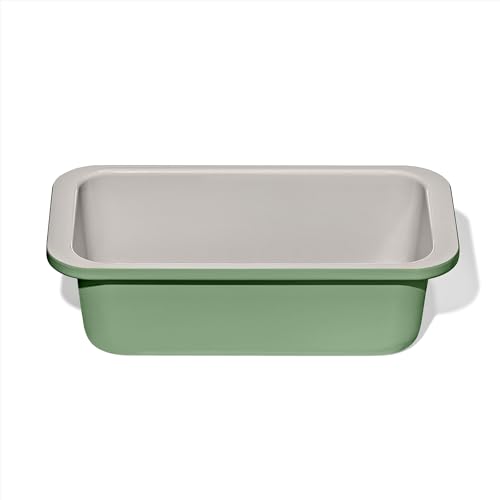
- 4. Caraway Non-Stick Ceramic-Coated 1 lb Loaf Pan — Best premium
- 5. Flavehc Cast Iron Loaf Pan with Lid 9x5 in — Runner-up
- 6. Tasty Clean Ceramic Loaf Pan 9 x 5 in — Best for beginners
- Coated steel or solid stoneware: which wins in a busy kitchen?
- What the oven ceiling actually tells you
- How long does a ceramic coating last on the line?
- What to look for in a ceramic loaf pan for professional chefs
- OXO Good Grips Pro vs. HVH stoneware: which fits your service?
- The verdict
- FAQ
The best ceramic loaf pan for professional chefs is the OXO Good Grips Non-Stick Pro Ceramic Coated 1 lb Loaf Pan, because a ceramic-coated aluminized steel body reheats fast between bakes and OXO's expanded rim handles let you pull hot tins one-handed. The Caraway 1 lb Loaf Pan takes it if you need a higher oven ceiling: the listing cites 550°F, against OXO's usual coated-steel range. Here's the 30-second shortlist: OXO Pro for daily service, Caraway for high-heat work, HVH stoneware if you plate straight from the oven.
Best ceramic loaf pan for professional chefs at a glance
| Pick | Body & size | Oven ceiling (claim) | Price |
|---|---|---|---|
| Ceramic-coated aluminized steel 1 lb loaf |
Not listed | Check Price | |
Best for pros HVH Ceramic Loaf Pan 9 x 5 in |
Fired stoneware 3.5 x 5 x 9 in, 3.66 lb |
Not listed | Check Price |
Best large-capacity Ashley Elaine 9"x5" Fluted Loaf Pan |
Stoneware, fluted 11 x 5.75 x 3 in, 2.2 lb |
500°F claim | Check Price |
Best premium Caraway Ceramic-Coated 1 lb Loaf Pan |
Ceramic-coated 2 x 8 x 4 in, 1 lb |
550°F claim | Check Price |
| Enameled cast iron 8.5 x 4.5 in, 9.19 lb |
Not listed | Check Price | |
Best for beginners Tasty Clean Ceramic Loaf Pan 9 x 5 in |
Ceramic-coated aluminized steel 9 x 5 in |
425°F claim | Check Price |


How I screened this shortlist
I started with the Bread & Loaf Pans category on Amazon and pulled every ceramic-coated or ceramic-bodied tin I could confirm from the listing text. Anything without a stated body material was cut. Anything sold only as a novelty shape was cut. That left the six above, spread across coated steel, fired stoneware and enameled cast iron.
The keyword promises a pan "for professional chefs". None of these tins are commercial-grade sheet or hotel pans, and Amazon's search ignored the qualifier. So read this as a shortlist for a working home cook, a private chef, or a small-kitchen operator who wants ceramic in the rotation. The word professional here means demanding, not certified.
What I actually compared across the set:
- Body construction. Coated aluminized steel (OXO, Caraway, Tasty) versus fired stoneware (HVH, Ashley Elaine) versus enameled cast iron (Flavehc).
- Stated dimensions and weight. A 9.19 lb Flavehc lifts differently to a 2.2 lb Ashley Elaine.
- Oven ceiling as the listing states it. 425°F on the Tasty, 500°F on the Ashley Elaine, 550°F on the Caraway. The others don't publish one.
- Cleaning method. Dishwasher-safe claims versus hand-wash-only.
- Sales position in this set. OXO is the one buyers choose most often here, and by a wide margin: Ashley Elaine and HVH are the slowest movers of the six.
Two picks were cut for the article that would have made it into a home-baker guide. Both used silicone bodies, and silicone reheats slowly between bakes, which matters when you're turning a station.
1. OXO Good Grips Non-Stick Pro Ceramic Coated 1 lb Loaf Pan — Best overall
A ceramic-coated aluminized steel tin with rounded corners and rim handles, and it's the one buyers here pick more than any other by a long margin.
Best for: a working baker running a 1 lb loaf on a tight prep schedule. Skip it if: you need a straight-sided 9 x 5 in stoneware pan for pound cake service.
What separates the OXO from the rest of this set is speed of turnover. Aluminized steel reheats fast between bakes, which matters when you're pulling one loaf and sliding the next in on the same schedule. OXO says the ceramic coating protects against scratching, staining and corrosion, and that the light-coloured interior spreads heat evenly across the pan. The rounded interior corners are the detail I'd point to: they eliminate the sharp inside angle where quick breads catch, and they mean a spatula clears the pan in one pass. The expanded rim handles matter more than they look. On a 1 lb tin they give a full grip through a mitt, which is the difference between confident one-handed transfer and a two-hand shuffle.
The trade-off is capacity and material. This is a 1 lb pan, not a 9 x 5 in workhorse, and the listing doesn't publish an oven ceiling, so if your pound cake calls for 500°F you should look at the Ashley Elaine or the Caraway instead. It's also coated steel, not stoneware, so it won't go straight from oven to table the way HVH does.
Pros:
- Ceramic-coated aluminized steel reheats fast
- Rounded interior corners for clean release
- Expanded rim handles for mitted grip
- Dimension markings printed on the top surface
- The one buyers choose most often here
Cons:
- No stated oven ceiling on the listing
- 1 lb capacity, not a 9 x 5 in footprint
- Coating will fail eventually with metal tools
2. HVH Ceramic Loaf Pan 9 x 5 in — Best for pros
Fired stoneware in the standard 9 x 5 in footprint, with a glazed interior meant to release cleanly and plate straight from the oven.

Best for: a chef who wants oven-to-table stoneware with a fired glaze. Skip it if: you need a light pan for stacking or a pan under 4 lb.
The HVH is the pick I'd hand to a private chef who cares about presentation. Stated dimensions are 3.5 x 5 x 9 in on the interior, weight is 3.66 lb, and the body is fired stoneware rather than a coating over metal. HVH says the glaze is lead-free and smooth enough to prevent sticking, and that the pan is dishwasher-safe without glaze wear. Read the second claim as a manufacturer statement, not a guarantee: no ceramic body enjoys a nightly dishwasher cycle over a year. The reason this one earns "best for pros" isn't a spec, it's the format. Stoneware holds heat gently after you pull it, so a terrine or a pâté doesn't shock-cool in the middle while you slice, and the white glaze reads clean on a plate.
What it costs you is weight and thermal lag. At 3.66 lb empty, plus a loaded loaf, this is a two-hand pan and it takes longer to come up to temperature than the OXO does. The listing doesn't publish an oven ceiling either, so keep it well below the temperatures the coated-steel picks tolerate.
Pros:
- Fired stoneware body, not a coating
- Standard 9 x 5 in interior for common recipes
- White glaze plates well from the oven
- Dishwasher-safe per the listing
Cons:
- 3.66 lb empty, heavy to lift loaded
- Slower to heat than aluminized steel
- No stated oven ceiling
3. Ashley Elaine 9"x5" Fluted Loaf Pan — Best large-capacity
Fluted stoneware measuring 11 x 5.75 x 3 in, longer than the standard 9 x 5 in tin and rated to 500°F per the listing.

Best for: long pound cakes and terrines that don't fit a standard 9 x 5 in pan. Skip it if: you standardise on 9 x 5 in loaves and want interchangeable tins.
Read the dimensions carefully: this pan is 11 in long by 5.75 in wide, not 9 x 5. That's the reason it's here. If you bake a Cook's Illustrated pound cake or a longer sandwich loaf, a 9 x 5 in tin overflows and you end up with a mushroom top. The Ashley Elaine gives you 2 in more length and about three-quarters of an inch more width, and the fluted sides throw a decorative pattern once the loaf is unmoulded. Ashley Elaine says the stoneware is oven-safe to 500°F, that the glaze is scratch-resistant, and that the pan is dishwasher-safe. Empty weight is 2.2 lb, which is lighter than the HVH stoneware and much lighter than the Flavehc cast iron.
The trade-off is the format itself. If you've already standardised on 9 x 5 in tins, this is a one-off pan for a specific recipe, not a fleet addition. The fluted sides also mean the loaf sits proudly on the plate, but a straight-sided cake for slicing into rounds isn't what you'll get.
Pros:
- 11 x 5.75 x 3 in interior for longer loaves
- 500°F oven ceiling per the listing
- 2.2 lb empty, light for stoneware
- Fluted decorative sides
Cons:
- Non-standard footprint, not a 9 x 5 in swap
- Fluted sides limit slicing shape
- Sells slowly in this set
4. Caraway Non-Stick Ceramic-Coated 1 lb Loaf Pan — Best premium
A coated 1 lb tin with the highest published oven ceiling in this set, 550°F, and a coating stated free of PTFE, PFOA and PFAS.

Best for: a home pro who wants a 550°F ceiling and a coating free of PTFE, PFOA and PFAS. Skip it if: you refuse to hand wash or you want a 9 x 5 in footprint.
Caraway is the most expensive pick here, and the deciding number on the listing is 550°F. That's 50°F higher than the Ashley Elaine claims and 125°F higher than the Tasty. If your rotation includes high-heat pound cakes, dutch-oven-style enriched breads, or roasted vegetable terrines where you finish under a broiler, that ceiling changes what the pan can do. Stated dimensions are 2 x 8 x 4 in and weight is 1 lb, which puts it in the same working class as the OXO. Caraway says the coating is free of PTFE, PFOA, PFAS, lead and cadmium, and the pan is hand-wash only after service. The cream finish looks the part on an open shelf.
What you're paying for is not more capacity or a fancier body, it's the coating chemistry and the oven ceiling. If neither matters to your work, the OXO does the same job for less. Hand wash is the real cost: the coated-steel picks that permit a dishwasher will always be quicker to reset.
Pros:
- 550°F oven ceiling per the listing
- Coating stated free of PTFE, PFOA and PFAS
- 1 lb empty weight, easy one-handed lift
- 2 x 8 x 4 in fits smaller ovens
Cons:
- The most expensive pick here
- Hand wash only per the listing
- 1 lb capacity, not a 9 x 5 in tin
5. Flavehc Cast Iron Loaf Pan with Lid 9x5 in — Runner-up
Enameled cast iron with a matte black interior and a lid you can also use as a second pan.

Best for: a chef baking sourdough in cast iron with a lid, on induction or gas. Skip it if: you need to lift a pan one-handed or bake more than two loaves an hour.
The Flavehc is the outlier here. It isn't a ceramic-bodied or ceramic-coated pan in the strict sense: it's enameled cast iron, where a glass-based enamel coats the iron. I've included it because the lid solves a specific problem, which is baking a sourdough with steam retention without wrapping the pan in foil. Flavehc says the two pans nest so one becomes the lid, that the matte black interior enamel cleans easily, and that the pan works on gas, electric, ceramic and induction cooktops. Stated dimensions are 2.76 x 11.3 x 5.46 in overall, cavity 8.5 x 4.5 in, and empty weight is 9.19 lb. That last number is the honest one. Loaded with a wet dough, this is a two-hand pan every single time.
The reason it's the runner-up and not higher is throughput. Cast iron takes forever to preheat and forever to reset between bakes, so on a busy service you'll only turn two loaves in the time the OXO turns four. But for a proper hearth-style crust with a closed lid, nothing else in this set competes.
Pros:
- Enameled cast iron holds heat
- Second pan doubles as a lid for steam
- Works on gas, electric, ceramic, induction
- Matte black interior easy to clean per the listing
Cons:
- 9.19 lb empty, two-hand lifting required
- Slow to preheat and reset
- No stated oven ceiling
6. Tasty Clean Ceramic Loaf Pan 9 x 5 in — Best for beginners
A ceramic-coated aluminized steel 9 x 5 in tin, sold as a 2-pack, rated to 425°F per the listing.

Best for: a young cook learning yeast breads and quick loaves in a 9 x 5 in tin. Skip it if: your recipes routinely cross 425°F.
The Tasty is the pan I'd put in a first apartment or a training kitchen. The listing describes the coating as PFAS- and PFOA-free, the body as aluminized steel, and the pan as dishwasher-safe with hand washing recommended for coating longevity. Stated overall dimensions are 2.72 x 9.72 x 5.79 in, so it lands at the standard 9 x 5 in footprint every basic bread recipe assumes. The stated oven ceiling is 425°F, and that's the number that decides it: banana bread, sandwich loaves and meatloaf all bake well below that mark. A cook who's still learning what a properly proofed dough feels like doesn't need a 550°F pan, and paying for one is throwing money away.
Where it loses ground to the OXO is heat spreading and construction detail. The OXO publishes a lighter interior colour and rounded corners, and it sells at a much stronger clip in this set. Tasty's 425°F ceiling also puts a real limit on how ambitious you can get, so it isn't a pan that grows with you the way the Caraway does.
Pros:
- Standard 9 x 5 in footprint
- Coating stated free of PFAS and PFOA
- Dishwasher-safe per the listing
- Aluminized steel, reheats quickly
Cons:
- 425°F oven ceiling limits high-heat bakes
- No rounded-corner detailing published
- Second-slowest seller in this set
Coated steel or solid stoneware: which wins in a busy kitchen?
The obvious answer, that stoneware is more "professional", is the wrong answer for service work. What actually decides it is how fast the pan resets between bakes, and coated aluminized steel wins that fight on physics alone.
Coated steel picks in this set: OXO, Caraway, Tasty. Each is a thin metal shell with a ceramic coating over it, and each empty weighs 1 lb or lands close to it. That low thermal mass means the pan comes up to oven temperature quickly when you slide it in, and cools quickly when you pull it, so you can turn it over on the same station.
Stoneware picks: HVH at 3.66 lb, Ashley Elaine at 2.2 lb. The Flavehc cast iron sits at 9.19 lb. All three hold heat for a long time after you pull them, which is a virtue for oven-to-table service and a liability for throughput. Choose stoneware when the loaf is a plated course. Choose coated steel when the loaf is a station output.
What the oven ceiling actually tells you
Three of these six pans publish an oven ceiling. The Caraway claims 550°F, the Ashley Elaine claims 500°F, and the Tasty claims 425°F. The OXO, HVH and Flavehc don't publish a number, which is a category norm rather than a red flag.
Here's the trick with those figures. Most yeast breads bake between 375 and 450°F. Most pound cakes and quick breads sit at 350 to 375°F. So the difference between a 425°F pan and a 550°F pan looks huge but disappears for almost every recipe you'll ever run.
The ceiling matters in three specific cases:
- High-heat enriched breads where the recipe asks for an initial blast above 450°F.
- Roasted vegetable terrines finished under a broiler.
- Bread with a crust bake where the last five minutes push above 450°F to set the crumb.
If none of those apply, the 425°F ceiling on the Tasty is fine. If any of them apply routinely, buy the ceiling.
How long does a ceramic coating last on the line?
This is the honest part. Ceramic coatings on steel don't last forever, and no listing here publishes a warranty against coating failure. What extends the coating's life is straightforward:
- Hand wash the coated picks whenever possible. Caraway is explicit that it's hand-wash only; the OXO and Tasty tolerate a dishwasher but the cycle wears the coating over months.
- Never use metal tools. Silicone spatulas and wooden peels are what the coating is designed for.
- Skip the aerosol pan spray. The lecithin and propellants build up as a lacquer the coating can't shed, and once that layer is on, the release is worse than a bare pan.
- Let the pan cool before it hits water. Thermal shock is what cracks a coating.
Stoneware bodies like the HVH and Ashley Elaine fail differently: the glaze can craze, meaning develop fine surface cracks, if you shock-cool them. Both listings say the glaze is dishwasher-safe. I'd still hand wash. Cast iron enamel like the Flavehc's is the most forgiving of the three, but it chips if you knock it against another pan in the sink.
What to look for in a ceramic loaf pan for professional chefs
If you're shopping outside this shortlist, here's what to check on the listing before you buy. This applies to any ceramic loaf pan for professional chefs, not just the six above.
- A stated oven ceiling. No number on the listing usually means the manufacturer doesn't want to commit past 400 to 425°F. Fine for most bakes, not fine for high-heat work.
- Body construction, spelled out. "Ceramic" can mean a fired stoneware body, a ceramic coating over aluminized steel, or a ceramic-enameled cast iron. All three are ceramic; none of the three behaves like the others.
- Empty weight. Anything under 2 lb lifts one-handed. Anything over 5 lb doesn't, loaded.
- Coating claims. PFAS-free and PFOA-free are common now. PTFE-free is less common and worth noting if it matters to you.
- Rim design. Expanded rims, rolled rims and eared rims are all easier to grip through a mitt than a stamped straight edge.
- A published interior dimension, not just an overall footprint. A 9 x 5 in overall pan can have an 8.5 x 4.5 in cavity, and the difference matters for a recipe that fills a tin exactly.
OXO Good Grips Pro vs. HVH stoneware: which fits your service?
These are the two picks a working cook is most likely to argue between, so the head-to-head is worth spelling out.
The OXO Good Grips Non-Stick Pro is a 1 lb ceramic-coated aluminized steel tin. Rounded interior corners, expanded rim handles, dimension markings on the top surface. Coated steel means fast preheat and fast reset between bakes. This is the pan for turnover.
The HVH 9 x 5 in stoneware is a fired ceramic body, 3.66 lb empty, glazed white. The 9 x 5 in cavity fits almost every published bread recipe unchanged, and stoneware plates cleanly from the oven. This is the pan for presentation.
If your day is baking loaves and moving them to a cooling rack fast, buy the OXO. If your day is baking a pâté or a terrine that goes to the table in the tin, buy the HVH. Neither replaces the other. A serious kitchen ends up with both.
The verdict
The OXO Good Grips Non-Stick Pro Ceramic Coated 1 lb Loaf Pan wins as the default ceramic loaf pan for a working cook. It's coated aluminized steel, so it resets fast between bakes; the rounded interior corners release clean; the expanded rim handles let you move it one-handed through a mitt; and it's the pan buyers here choose most often by a wide margin.
Two conditions flip that verdict. If your rotation regularly crosses 450°F, buy the Caraway 1 lb Loaf Pan: 550°F is the highest published ceiling in this set, and the coating is stated free of PTFE, PFOA and PFAS. If you plate loaves at the table or bake terrines that need gentle heat retention, buy the HVH 9 x 5 in stoneware: the fired ceramic body holds heat kindly and the white glaze reads clean on a plate.
The cutoff between OXO and Caraway is 450°F. Below it, save the money; above it, buy the ceiling. The cutoff between coated steel and stoneware isn't a number, it's a workflow question: is the loaf a station output or a plated course?
FAQ
Is a ceramic loaf pan actually better than a metal one for professional work?
Ceramic loaf pans aren't automatically better than uncoated metal ones. They release more predictably, which saves time on the line, and they're easier to clean, which matters when a station turns over quickly. What you give up is the ability to use metal tools freely and, on coated picks, some of the temperature ceiling that a bare metal tin offers. Choose ceramic when release speed matters more than tool freedom.
What's the difference between ceramic-coated and solid stoneware?
The difference between ceramic-coated and solid stoneware pans is the core material. Coated pans, like the OXO, Caraway and Tasty here, have a thin ceramic layer over aluminized steel. Solid stoneware pans, like the HVH and Ashley Elaine, are fired clay all the way through. Coated pans reheat faster and lift lighter. Stoneware holds heat longer and plates better from oven to table.
Is the Caraway loaf pan worth the premium over the OXO?
The Caraway loaf pan is worth the premium if you actually use the extra oven ceiling. Caraway's listing claims 550°F, and the coating is stated free of PTFE, PFOA and PFAS. If your recipes cross 450°F or coating chemistry matters to you, the money is spent well. If your baking sits between 350 and 425°F, the OXO does the same job for less, so the premium buys you nothing.
Can I use a ceramic loaf pan on the stovetop?
You can use a ceramic loaf pan on the stovetop only if it's the Flavehc enameled cast iron in this set. Flavehc says that pan works on gas, electric, ceramic and induction cooktops. The coated steel picks and the fired stoneware picks are oven-safe only. Putting a stoneware pan on direct flame will crack it, and putting a coated-steel pan on high heat will destroy the coating quickly.
What size loaf pan should a professional chef standardise on?
A working chef should standardise on a 9 x 5 in loaf pan, because almost every published bread and pound cake recipe assumes that footprint. The HVH, Flavehc and Tasty here all sit at that size. A 1 lb pan like the OXO or Caraway is a smaller-format tin better suited to single servings, tea loaves and portioned pound cakes. Keep both in the rotation if you have the shelf space.
Start with one pan, not six. If you don't yet know which format your kitchen leans on, the OXO Good Grips Pro is the safest first buy: light, cheap to replace, quick to reset, and forgiving enough that you'll learn what you actually need before you commit to a stoneware collection or a cast iron format. Bake a dozen loaves in it, note where it falls short of your work, and buy the second pan against that specific gap. That's how a functional loaf-pan shelf gets built, and it's why the working cook's shelf almost never matches the beginner's shopping list.