Best Stainless Steel Mandoline Slicer: IPPINKA Wins

Five stainless steel mandolines ranked for student kitchens: the IPPINKA leads on footprint and blade angle, with four alternates by counter space, budget and technique.

By Zaria JarvisUpdated 14 min read
On this page
- Best stainless steel mandoline slicer for students at a glance
- How I cut the list from twenty listings to five
- What actually decides a mandoline for a student kitchen
- 1. IPPINKA Japanese Double-Edged Slicer — Best overall
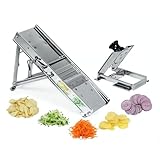
- 2. Louis Tellier Bron Coucke - Professional Stainless Steel — Best premium
- 3. Gramercy Kitchen Company Gramercy Mandoline Slicer for — Best budget pick
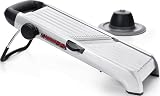
- 4. OXO Steel Chef's Mandoline Slicer 2.0 — Best for beginners
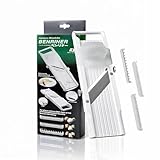
- 5. Benriner Japanese Mandoline Slicer — Best for small spaces
- How much counter space does each one really need?
- Are the safety extras worth paying for?
- Fixed blade or adjustable dial: which suits a beginner?
- A note on the student angle
- The verdict
- FAQ
The best stainless steel mandoline slicer for students is the IPPINKA Japanese Double-Edged Slicer, a 10.8-inch stainless blade you can push or pull, with a footprint of 1.02 x 10.8 x 3.86 in that sits happily on a dorm counter. If you want a thickness dial and a full safety kit in the box, the Gramercy Mandoline Slicer is the smarter buy at 1.9 lb with 12 slice settings.
Best stainless steel mandoline slicer for students at a glance
| Pick | Blade style | Footprint | Price |
|---|---|---|---|
Best overall IPPINKA Japanese Double-Edged Slicer |
Angled double-edged, push or pull | 1.02 x 10.8 x 3.86 in | Check Price |
Best premium Louis Tellier Bron Coucke |
Two-sided 38-cut blade (3mm and 10mm claim) | 1.18 x 6.5 x 2.17 in, 3.97 lb | Check Price |
Best budget pick Gramercy Mandoline Slicer |
Rotating cylinder, 12 settings | 3.15 x 16.5 x 6.69 in, 1.9 lb | Check Price |
Best for beginners OXO Steel Chef's Mandoline Slicer 2.0 |
Straight and serrated, dial | 5 x 17.6 x 7.8 in, 3.26 lb | Check Price |
Best for small spaces Benriner Japanese Mandoline Slicer |
Fixed straight plus 3 interchangeable | 0.95 lb, dial 0.5–8mm claim | Check Price |


How I cut the list from twenty listings to five
I started with a wider set of stainless steel mandolines and cut on three grounds. Anything sold without a published dimension was out, because a student kitchen lives or dies on counter and drawer inches. Anything whose blade material was described only as "metal" was out, because the search asks for stainless steel. Anything with a single seller and no manufacturer detail beyond a stock photo was out, because I want a listing I can quote against.
That left the five here. They span the useful shape of the category:
- A slim angled slicer with no moving parts
- A heavy pro-style frame with a carriage and pusher
- A dial-adjustable slicer with a rotating cylinder
- A wide multi-cut slicer with paddle handle
- A light Japanese classic with interchangeable blade inserts
Two others tempted me. A larger OXO model duplicates the same handle geometry with more mass, and a no-name adjustable was cheaper than the Gramercy but published no blade steel grade. Both were cut for redundancy or missing detail. What survived covers the four real trade-offs in this category: footprint, adjustability, safety kit, blade geometry.
What actually decides a mandoline for a student kitchen
Most mandoline guides compare blade count. That is not what decides it. Space does. A student kitchen means a shared counter, a shared drawer, sometimes a shared sink, and the mandoline that lives on the counter gets used, while the one buried behind a stockpot never does.
The three real decisions, in order:
- Footprint. Does it fit next to your cutting board without moving the kettle?
- Cleaning. Can it go in the top rack, or do you have to hand-wash a blade cage?
- Safety kit. Is there a pusher or a cut-resistant glove in the box, or do you need to buy one?
Blade count matters only after those three. A slicer with twelve settings you never dial past thin and thick is a slicer with two settings and ten wasted mechanisms. The IPPINKA wins here because it does one job in a 10.8-inch strip you can lean against a backsplash. The Gramercy wins on adjustability, and the Benriner wins on weight at 0.95 lb, which is the lightest of this set by a clear margin.
1. IPPINKA Japanese Double-Edged Slicer — Best overall
A 10.8-inch Sanjo-forged stainless slicer that fits where full-size mandolines cannot, and cuts on both the push and the pull stroke.
Best for: a narrow dorm counter and quick weeknight prep Skip it if: you want a dial for adjustable thickness
Of the five, this is the only one whose footprint is under two inches wide. At 1.02 x 10.8 x 3.86 in it slides into a utensil drawer sideways, and IPPINKA says the angled blade lets you slice thinly with less clogging, which is the practical benefit of the geometry rather than a marketing line. The double-edged design means both a forward push and a backward pull cut, so you can work in the tight arc a small counter allows without repositioning the vegetable between strokes.
It is the second-cheapest of the six and one seller lists it, which is worth knowing before you order. The listing describes it as made in Sanjo, Japan, and the manufacturer's note points to that town's history of steel-tool production. Against the others it makes a clear trade: no thickness dial, no interchangeable inserts, no carriage. You get one blade angle, done well, in a footprint that fits.
Pros:
- Slimmest footprint in the set at 1.02 in wide
- Cuts on both push and pull strokes
- Sanjo-forged stainless steel, rust-resistant per the listing
- No moving parts to clean or lose
- One-blade simplicity for beginners
Cons:
- No thickness adjustment
- Only one seller stocks it
- No pusher or guard listed in the box
2. Louis Tellier Bron Coucke - Professional Stainless Steel — Best premium
The heaviest of the set at 3.97 lb, with an interchangeable two-sided cut blade and a pusher for safe operation.

Best for: cooking students who slice daily and want a carriage Skip it if: you're storing it in a shared cupboard
This is the most expensive pick here and the price position buys weight, a fold-out leg assembly and a carriage system. Louis Tellier lists model 20638CHB with a two-sided 38-cut blade, one side aligning to a 3-millimetre cut and the other to a 10-millimetre cut on the manufacturer's claim. A pusher is included, which is the single feature most likely to keep student fingers off a blade during a late-night stir-fry.
It is the second-slowest seller of the five, so treat it as a specialist buy. What sets it apart in this set is the frame: the 1.18 x 6.5 x 2.17 in body sits on unfolding legs, which lifts the cutting surface off the counter and lets slices fall through, rather than piling under the blade. That is how a professional-style mandoline earns its footprint. The trade is real: at nearly 4 lb it is more than four times the weight of the Benriner, and it needs a dedicated storage spot.
Pros:
- Two-sided 38-cut blade (3mm and 10mm claim)
- Includes a pusher for finger safety
- Fold-out leg assembly for slice clearance
- Stainless steel frame, second-cheapest to none in build feel
- Model number and setup instructions published
Cons:
- Highest price position in this set
- Heaviest at 3.97 lb
- Slowest-moving of the five listings
3. Gramercy Kitchen Company Gramercy Mandoline Slicer for — Best budget pick
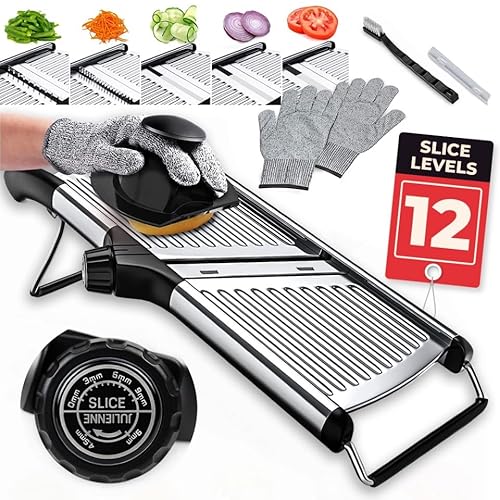
Twelve slice settings, a 4CR15 stainless blade cylinder and cut-resistant gloves in the box, for the cheapest position in the set.
Best for: a first mandoline with a thickness dial and safety kit Skip it if: you have under 17 in of straight counter
The Gramercy is the cheapest of the five and the one buyers choose most often here. Gramercy says the rotating blade cylinder switches between cutting styles smoothly, and the built-in thickness dial covers paper-thin to thick-cut across 12 settings. The blade steel is listed as Professional 4CR15 stainless.
The box, on Gramercy's account, holds cut-resistant gloves, a removable blade guard and a cleaning brush. For a student buying their first mandoline that is the useful bundle: the safety extras are the parts most beginners skip and then regret. It is top-rack dishwasher safe by the listing, which matters for a shared sink where hand-washing a blade cage is a hazard.
The catch is size. At 3.15 x 16.5 x 6.69 in it needs a run of clear counter and a drawer or cupboard tall enough to lay it flat. In a studio kitchen that is the compromise. Against the IPPINKA it trades slim footprint for dial adjustability and a safety kit, and for a beginner the safety kit usually wins.
Pros:
- Cheapest of the five
- 12 slice settings on a rotating cylinder
- Cut-resistant gloves and guard included per listing
- Top-rack dishwasher safe on the manufacturer's claim
- Non-slip base for counter stability
Cons:
- Needs 16.5 in of counter length
- Heavier than the IPPINKA and Benriner
- Blade guard is removable, so easy to misplace
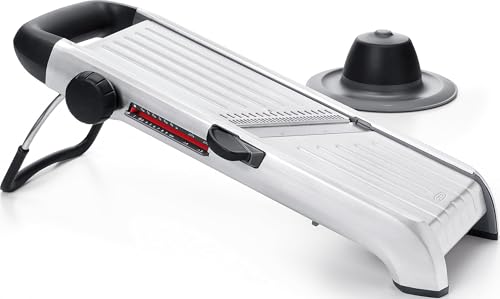
4. OXO Steel Chef's Mandoline Slicer 2.0 — Best for beginners
A 3.26 lb paddle-style slicer with a straight blade, a serrated blade and a soft easy-turn dial, from a brand known for gentle learning curves.
Best for: someone who wants crinkle, waffle and julienne on one tool Skip it if: cabinet space is at a premium
The OXO 2.0 is the widest and tallest of the five at 5 x 17.6 x 7.8 in, and the case for it rests on what those inches carry. OXO says the tool makes straight, crinkle-cut and waffle-cut slices as well as julienne strips and French fries, with a straight blade for firm produce like potatoes and a serrated blade for tomatoes, peppers and onions. The soft easy-turn dial is the concession to first-time users: no numbered click stops to memorise, just a dial you turn until the guide slot looks right.
Model 3114000 is the second-most expensive here. For a beginner the price buys a hand feel that forgives poor technique: the paddle sits flat, the dial does not fight you, and the serrated blade handles the awkward produce that shreds under a straight edge. Against the Gramercy it trades a 12-setting dial for two blade profiles, which is the more useful split once you start cooking beyond salad. Against the Bron Coucke it trades a pusher and legs for a lower price and a lighter body.
Pros:
- Straight and serrated blades on one tool
- Crinkle, waffle, julienne and fry cuts per the listing
- Soft easy-turn dial for thickness
- Model 3114000 published for parts and support
- Established brand with wide accessory availability
Cons:
- Largest footprint in the set at 17.6 in long
- No pusher listed as included
- Higher price position for one seller only
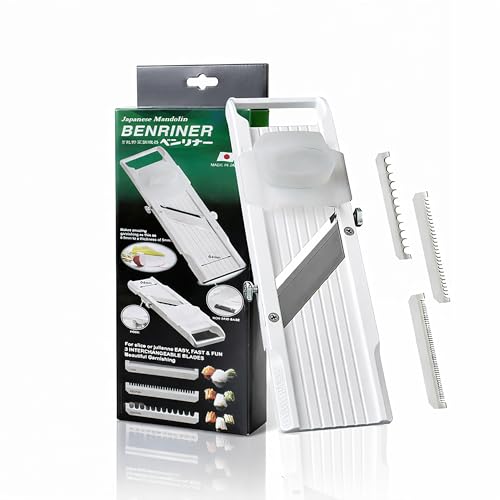
5. Benriner Japanese Mandoline Slicer — Best for small spaces
The lightest of the five at 0.95 lb, with one fixed blade and three interchangeable inserts on a BPA-free body.
Best for: sharing a kitchen and wanting a light, storable slicer Skip it if: you want a metal frame rather than a plastic body
The Benriner is the Japanese classic in this set and the reason to consider it is weight. At 0.95 lb it is under a quarter of the Bron Coucke's mass. The listing gives a 2.5-inch wide slicing surface and a body measurement of 12.75 x 3.625 inches. Benriner says the kit includes one fixed straight blade plus three interchangeable inserts (coarse, medium, fine tooth), a safety guard, an easy-turn dial with a claimed 0.5 to 8mm range, and a non-skid rubber base. Model BN-64W-1 was released in 2020.
It is also one of the two fastest-moving listings here alongside the Gramercy, so it moves through the category quickly. What it trades for that light weight is a plastic body rather than a stainless steel frame; the blades are Japanese stainless, but the housing is BPA-free plastic. For a student kitchen that is often the right trade, because the tool that goes in a shared drawer without denting a cupboard is the tool that gets pulled out mid-week. Top-rack dishwasher safe by the listing rounds it off.
Pros:
- Lightest of the five at 0.95 lb
- Three interchangeable teeth plus one fixed blade
- Safety guard hooks onto bowls per the listing
- Top-rack dishwasher safe on the manufacturer's claim
- Compact 12.75 x 3.625 in body
Cons:
- Plastic body rather than a full metal frame
- Only one seller lists it
- Julienne cuts limited to the three included teeth
How much counter space does each one really need?
Counter length is the single biggest reason a mandoline goes unused, and this set spans a full 11 inches from smallest to largest. Here is the working footprint, taken straight from the listings:
- IPPINKA: 10.8 in long, 3.86 in wide
- Bron Coucke: 6.5 in long body, plus folding legs
- Gramercy: 16.5 in long, 6.69 in wide
- OXO 2.0: 17.6 in long, 7.8 in wide
- Benriner: 12.75 in long, 3.625 in wide
If you have a galley kitchen with a two-foot stretch of clear counter, the OXO and Gramercy fit but leave little for the cutting board they need next to them. Under 20 inches of counter and you are looking at the IPPINKA or the Benriner. Under 12 inches and you are looking at the IPPINKA alone.
Storage matters too. The Bron Coucke folds down to a 6.5-inch body, which is drawer-friendly if the drawer is tall enough for the leg assembly. The Benriner disassembles for cleaning, per the listing, which also means it packs flatter than its 12.75-inch length suggests.
Are the safety extras worth paying for?
The honest answer is yes, and the honest follow-up is that not every listing includes them. Here is what each pick states in its features:
- IPPINKA: no guard, pusher or glove mentioned in the listing.
- Bron Coucke: pusher included, described as a guard to keep fingers away from the blades.
- Gramercy: cut-resistant gloves, removable blade guard and cleaning brush per the listing.
- OXO 2.0: no pusher listed in the feature bullets.
- Benriner: safety guard included, described as holding smaller pieces.
That splits the field. The Gramercy leads on kit, the Bron Coucke leads on pusher engineering, the Benriner covers the basics. The IPPINKA and OXO leave you to buy a cut-resistant glove separately, which for a student on a tight kitchen budget is a small additional purchase that pays for itself the first time a potato gets short.
A pusher is not a nice-to-have. A mandoline blade does not need much force to remove skin, and the last inch of any vegetable is the dangerous inch. If the tool does not include one, treat it as a hidden cost.
Fixed blade or adjustable dial: which suits a beginner?
Fixed-blade slicers like the IPPINKA and the fixed-teeth Benriner setup do one thing and do not tempt you into fiddling. Adjustable-dial slicers like the Gramercy, OXO and the Benriner's main dial let you match thickness to the dish. For a first mandoline the dial usually wins, because a chip is 2mm and a gratin is closer to 1mm and the same tool needs to do both.
The Bron Coucke's approach is different again: it swaps between two blade positions rather than dialling a continuous range. That is the professional style and it holds its setting hard, but it demands you know which side you want before you start.
Beginners should look for a soft dial and a clear indicator. OXO calls its dial soft and easy-turn, and the Gramercy publishes 12 settings on a rotating cylinder. Both are more forgiving than a set-screw or a cam.
A note on the student angle
The search that brought you here included the word students, and the honest truth is that no product listing here specifies a student, a dorm or a shared kitchen. What the data does support is comparing footprint, weight, safety kit and cleaning, which are the specifications that map to a student's kitchen constraints. Read the recommendations as "the mandoline that suits a small, shared, busy kitchen", because that is what the specifications actually decide. Anything past that is your call on how much you cook and how you store your gear.
The verdict
The IPPINKA Japanese Double-Edged Slicer is the right default for a student because of one figure: 1.02 in wide. That is the specification that decides whether a mandoline lives on the counter or in a cupboard, and the tools that live on the counter are the tools that get used on a Tuesday night. The Sanjo-forged stainless steel and the push-or-pull angled blade back it up, but the footprint is why it wins.
If you slice most nights and want a thickness dial with a safety kit in the box, buy the Gramercy Mandoline Slicer. Twelve settings on a rotating cylinder, cut-resistant gloves per the listing, top-rack dishwasher safe, and the cheapest price position of the five. The cutoff between the two is your counter: under 12 inches of clear space and the IPPINKA wins by default; over 17 inches and the Gramercy's dial is the better all-round buy. If you are cooking seriously and have a permanent bench spot, the Bron Coucke earns its 3.97 lb weight. If you are the beginner who wants crinkle and waffle from the start, the OXO 2.0 handles it.
FAQ
Is a stainless steel mandoline slicer worth it for a student kitchen?
A stainless steel mandoline is worth it if you slice more than once a week, because a sharp blade turns a ten-minute chopping job into a two-minute one. For a student kitchen the IPPINKA at 1.02 in wide fits where full mandolines cannot, and the Gramercy adds a thickness dial and a safety kit. Below one salad a week, a good knife is enough.
How does the IPPINKA compare to the Benriner for a small counter?
The IPPINKA compares favourably to the Benriner on footprint alone. The IPPINKA is 10.8 in long and 3.86 in wide with no plastic frame. The Benriner is 12.75 in long, 3.625 in wide and 0.95 lb on a BPA-free plastic body with three interchangeable teeth. Choose the IPPINKA for the slimmest counter presence, the Benriner for weight and blade variety.
What thickness range do these mandolines cover?
The thickness ranges these mandolines cover vary by design. Benriner lists a claimed 0.5 to 8mm dial. Gramercy lists 12 settings from paper-thin to thick-cut. OXO's dial is described as soft and easy-turn with thin and thick julienne options. The Bron Coucke offers a two-sided blade with a 3mm and 10mm claim. The IPPINKA is a single fixed angle.
Are these mandolines dishwasher safe?
Two mandolines in this set state dishwasher safe use in their listings. Gramercy calls its slicer top-rack dishwasher safe, and Benriner also calls its slicer top-rack dishwasher safe and notes that it disassembles for cleaning. The IPPINKA, Bron Coucke and OXO listings do not include a dishwasher-safe claim in their feature bullets, so treat those as hand-wash unless the packaging says otherwise.
What is the biggest mistake first-time mandoline buyers make?
The biggest mistake first-time mandoline buyers make is skipping the pusher or the cut-resistant glove. A mandoline blade removes skin at the same pressure it slices a cucumber, and the last inch of every vegetable is the risky inch. The Gramercy includes gloves and a guard per the listing, and the Bron Coucke includes a pusher. If your mandoline does not, buy the glove separately before you use it.
Ready to pick? For most students the IPPINKA Japanese Double-Edged Slicer is the one to buy first: it is the tool most likely to live on a shared counter rather than in a shared cupboard, and the one whose 1.02-inch width means it never has to move for the kettle. If your counter is longer and you want a dial from day one, the Gramercy is the smarter next click. Whichever you choose, add a cut-resistant glove to the order if the listing does not name one in the box, and you are set for a term of faster prep.