Best Lightweight Fertilizer for Beginners: Grow Queen
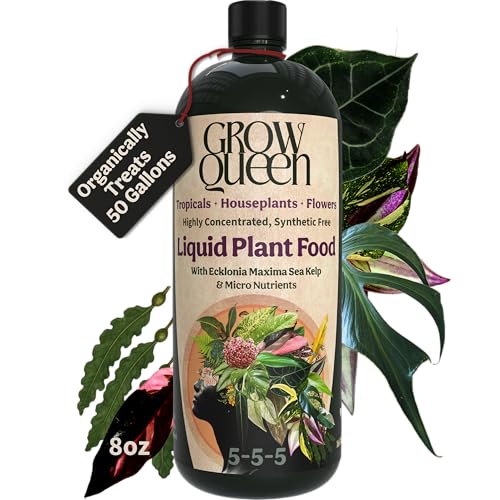
Five small bottles, five very different jobs. Here's which lightweight fertilizer suits a first-time plant owner, and which ones to leave for later.

By Zaria JarvisUpdated 14 min read
On this page
- Best lightweight fertilizer for beginners at a glance
- How I narrowed the field to five bottles
- The real deciding criterion
- 1. Grow Queen Organic Liquid Indoor Plant Food — Best overall
- 2. TPS Nutrients Indoor Plant Food — Best for beginners
- 3. GARDENWISE 10-10-10 All Purpose Plant Food — Best for heavy use
- 4. API Leaf Zone Freshwater Aquarium Plant Fertilizer — Best budget pick
- 5. Farmer's Secret Fruit & Bloom Booster — Best for families
- What the word beginner does not tell you here
- Liquid concentrate math without the headache
- What to check on the label before you buy
- How long does one 8 oz bottle actually last?
- The verdict
- FAQ
The best lightweight fertilizer for beginners is Grow Queen Organic Liquid Indoor Plant Food, an 8 oz bottle that mixes to treat 50 gallons and carries a balanced 5-5-5 organic formula gentle enough that the manufacturer says it feeds without burn. If you want the simplest first bottle to pick up, TPS Nutrients Complete Liquid Fertilizer in the same 8 oz size costs less and skips the ratio math entirely.
Best lightweight fertilizer for beginners at a glance
| Pick | N-P-K | Bottle | Price |
|---|---|---|---|
Best overall Grow Queen Organic Liquid |
5-5-5 organic | 8 oz, 0.79 lb | Check Price |
Best for beginners TPS Nutrients Complete Liquid |
Not listed | 8 oz, 6 x 1.5 x 1.5 in | Check Price |
Best for heavy use GARDENWISE All Purpose |
10-10-10 balanced | 8 oz, 6 x 3 x 3 in | Check Price |
Best budget pick API Leaf Zone Aquarium |
Iron + potassium claim | 16 oz, 4.8 oz shipping | Check Price |
Best for families Farmer's Secret Fruit & Bloom |
Bloom booster claim | 8 oz, 0.7 lb | Check Price |



How I narrowed the field to five bottles
Three questions cut the list.
- Does the bottle weigh under a pound, so a new gardener can lift, tip and store it one-handed? Every pick here clears that bar. Grow Queen ships at 0.79 lb, Farmer's Secret at 0.7 lb, and the TPS and GARDENWISE bottles at 8 oz apiece.
- Does the label give a beginner enough to work with? A dilution rate, a target plant list, or a printed N-P-K.
- Does the listing publish specifications a first-time buyer can compare? Dimensions, weight, size in fluid ounces, model number.
That third filter is stricter than it sounds. Two bottles in this set publish full dimensions: GARDENWISE at 6 x 3 x 3 in, TPS Nutrients at 6 x 1.5 x 1.5 in. That is one number a beginner can use to picture how the bottle fits on a shelf next to the watering can. It matters more than a marketing paragraph.
One pick made the cut on category alone. API Leaf Zone is an aquarium plant fertilizer, not a houseplant food. It appears here because a surprising number of "beginner fertilizer" shoppers turn out to be new aquarium keepers, and the price and dosing are gentle. That is the honest reason it is on the list.
The real deciding criterion
Most guides for the best lightweight fertilizer for beginners compare N-P-K ratios first. That is not what decides it.
What decides it is whether the label tells you a mixing rate you can actually follow. A 5-5-5 organic blend and a 10-10-10 balanced blend both work fine on a pothos if you dilute correctly. A bottle with no printed rate is a coin flip, no matter how good the formula.
- Grow Queen prints a coverage figure: 8 oz treats up to 50 gallons of mixed feed.
- Farmer's Secret prints a rate: 1 teaspoon per 2 gallons of water, every 2 to 4 weeks.
- API Leaf Zone prints a rate: 5 ml per 10 US gallons of aquarium water, weekly.
- GARDENWISE and TPS Nutrients list an indoor and outdoor use range but no rate in the copy shown.
If you are new and you buy one of the last two, keep the box the shipping label came in until you have read the actual bottle. The mixing rate lives there.
1. Grow Queen Organic Liquid Indoor Plant Food — Best overall
A gentle, organic 5-5-5 in an 8 oz bottle that mixes to 50 gallons of feed, which is more forgiving than any other pick here for a first houseplant collection.
Best for: a first houseplant collection that needs one gentle, do-everything bottle Skip it if: you only need to feed an aquarium or a heavy vegetable garden
Grow Queen wins on two things a beginner actually notices. First, the ratio is printed on the front. A 5-5-5 organic blend is the low-strength option in this set, and Grow Queen says the formula feeds without burn, which is the failure mode a new gardener fears most. Second, the bottle carries a coverage figure that turns a bottle into a schedule: 8 oz treats up to 50 gallons. Feed six one-gallon houseplants once a month and one bottle covers you for most of a year.
It is the most expensive pick here, and the sales rank puts it in the middle of this set rather than at the top. The listing leans on manufacturer language about kelp, auxins and microbes; treat those as claims from the brand, not measured effects. The premium position buys you the organic status and the printed ratio, not extra volume.
Pros:
- Balanced 5-5-5 organic ratio printed on the label
- 8 oz bottle mixes to 50 gallons of feed
- Under a pound at 0.79 lb, easy to store
- Brand says the formula feeds without burn
- Ecklonia maxima sea kelp listed as an ingredient
Cons:
- Most expensive pick in this set
- Kelp and microbe benefits are brand claims
- No dimensions published on the listing
2. TPS Nutrients Indoor Plant Food — Best for beginners
The simplest first bottle in the set, sized 6 x 1.5 x 1.5 in so it fits on a windowsill, and aimed at the exact plants a beginner already owns.

Best for: a nervous first-time feeder with pothos, snake plants or monstera Skip it if: you want a printed N-P-K ratio on the label
TPS Nutrients is the pick for a shopper who wants to stop reading the label and start pouring. The plant list on the listing reads like a beginner's shelf: monstera, pothos, philodendron, snake plants, peace lilies, fiddle leaf figs. That specificity matters. A beginner staring at 40 bottles wants to see the plant they own named on the front, and TPS names six of the common ones.
It also sits at the second-cheapest position here and shows the strongest sales rank in this set, which suggests the formula gets picked up more often than the alternatives. The bottle is narrow at 1.5 in on each side, so it hides behind a row of pots.
The trade-off is transparency. Unlike Grow Queen and GARDENWISE, the listing copy shown does not give an N-P-K ratio. You feed by trusting the brand's dilution instructions on the bottle. For a first purchase that is often fine; for a gardener who wants to learn what nitrogen, phosphorus and potassium each do, it is a step behind Grow Queen.
Pros:
- Second-cheapest of the five picks
- Names common beginner houseplants on the listing
- Narrow 6 x 1.5 x 1.5 in bottle stores easily
- Sells faster than the rest of this set
- Mixes with water for regular watering days
Cons:
- No N-P-K ratio in the listing copy
- No coverage figure published
- Indoor-only, so useless outdoors
3. GARDENWISE 10-10-10 All Purpose Plant Food — Best for heavy use
A balanced 10-10-10 with 6% chelated iron, aimed at a shopper who wants one bottle to cover indoor pots, outdoor beds and a small lawn.

Best for: someone feeding a mix of lawn, vegetable beds and indoor pots Skip it if: you only own two or three houseplants
GARDENWISE is a step up in strength. The ratio is 10-10-10, twice the nitrogen, phosphorus and potassium of Grow Queen, and the listing adds 6% chelated iron for greening. That combination is the general-purpose feed a first-time outdoor gardener actually needs, and it works indoors too if you dilute more than the label suggests.
The bottle measures 6 x 3 x 3 in, which is chunkier than the two other 8 oz picks. That is the shape of a bottle you keep in the garage, not the kitchen. The mid-range price position matches the mid-range use case: cheaper than Grow Queen, dearer than TPS.
Two limits to note. The listing copy does not print a teaspoons-per-gallon rate, so a beginner needs the bottle in hand to feed safely, and the sales rank is the second-slowest here, so if fast turnover is a proxy for anything you value, this is not the winner on that measure. Compared with the two lightest picks, it is the wrong choice for someone with three snake plants and nothing else.
Pros:
- Balanced 10-10-10 ratio printed on the label
- 6% chelated iron listed for leaf greening
- Works across indoor pots, vegetables and lawn
- Seaweed extract listed as an ingredient
- Mid-range price position for the versatility
Cons:
- Bulkier at 6 x 3 x 3 in than the other bottles
- No dilution rate in the listing copy
- The second-slowest seller in this set
4. API Leaf Zone Freshwater Aquarium Plant Fertilizer — Best budget pick
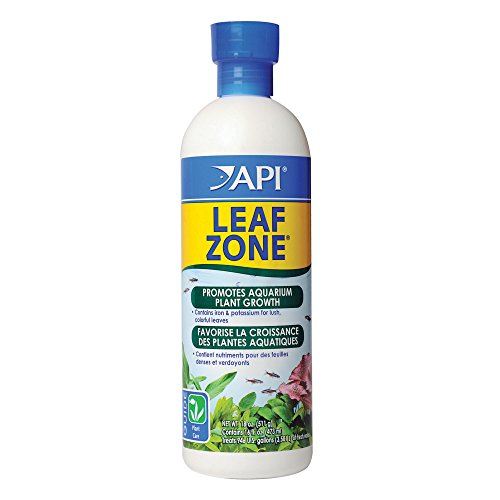
The cheapest bottle in the set, but only if your plants are underwater; API Leaf Zone is an aquarium product, not a houseplant food.
Best for: a planted freshwater aquarium, not a windowsill Skip it if: your plants live in soil
API Leaf Zone is the cheapest of the five and the only one that publishes a weekly dosing rate you can follow with a syringe: 5 ml per 10 US gallons of aquarium water. It is also the only pick here in a 16 oz bottle rather than 8 oz, so the price-per-ounce advantage is doubled. The listing names chelated iron and potassium as the working ingredients, and the format is aimed at rapid absorption through leaves rather than roots.
The catch is category. API Leaf Zone lives in aquarium water treatments, not houseplant fertilizers. You cannot pour it on a pothos and expect it to work like Grow Queen or TPS. It belongs on this list because the search phrase "lightweight fertilizer for beginners" pulls in a lot of new fishkeepers, and for them this is a genuinely easy first bottle.
If you have a soil-planted collection, treat this pick as a warning about reading the category before you buy. If you have a freshwater tank with anubias, java fern or amazon swords, the weekly cap-and-pour routine is about as beginner-friendly as fertilizing gets.
Pros:
- The cheapest of the five picks
- 16 oz bottle, larger than the other four
- Weekly dose printed as 5 ml per 10 gallons
- Chelated iron and potassium listed as ingredients
- Lightest at 4.8 oz shipping weight
Cons:
- Aquarium product, not a houseplant fertilizer
- The slowest seller of the five here
- No N-P-K ratio, because that is not how aquarium dosing works
5. Farmer's Secret Fruit & Bloom Booster — Best for families
A concentrated bloom booster with a printed dilution rate of 1 teaspoon per 2 gallons, aimed at households growing edibles rather than leafy houseplants.

Best for: a household growing tomatoes, citrus or roses through late summer Skip it if: your focus is leafy houseplants during winter
Farmer's Secret is a specialist. The brand describes it as super-concentrated and formulated for late summer and early fall, when fruiting and flowering plants are pushing their final crop. The bottle is 8 oz at 0.7 lb, the lightest houseplant-category pick here, and the listing prints the exact rate a beginner needs: 1 teaspoon per 2 gallons of water, every 2 to 4 weeks. That is a schedule you can put on a fridge.
It is the one buyers choose most often in this set, and the second-most expensive of the five. The premium position buys you the concentration, which stretches an 8 oz bottle further than the ratio alone suggests, and the printed schedule.
The trade-off is scope. This is not the bottle for a monstera in a living room. The brand describes the target plants as citrus, avocados, raspberries, cantaloupe, roses and petunias. Two of your five picks in this set overlap with that list at all. If your household grows food or flowers with a season, this is the right choice; if you are learning on a pothos, start with Grow Queen or TPS.
Pros:
- Dilution rate printed on the listing
- Super-concentrated, so a little goes far
- Lightest houseplant-format bottle at 0.7 lb
- Named target crops include citrus and roses
- Late-summer schedule matches fruit and flower cycles
Cons:
- Not designed for year-round houseplant feeding
- Second-most expensive pick here
- No N-P-K ratio in the listing copy
What the word beginner does not tell you here
The keyword modifier is "beginners", and it is worth being straight about what the product data can and cannot promise on that.
None of these bottles is labelled specifically as a beginner product on the listing. What some of them do carry is beginner-friendly information: a printed N-P-K, a plant list, a dilution rate or a coverage figure. Those are the features a first-time buyer benefits from, and they are what shifts the ranking here.
If a listing does not print any of those things, it is not automatically bad. It just means the learning happens on the bottle itself, after it arrives. For a shopper who wants to compare before buying, prefer the picks that show more on the listing page. That is Grow Queen and Farmer's Secret above the others, with GARDENWISE strong on ratio but weak on rate.
Liquid concentrate math without the headache
Liquid fertilizer looks intimidating because the units change. Here is how to read the three formats in this set without a calculator.
- Coverage format, used by Grow Queen: "8 oz treats up to 50 gallons." Translation: one bottle makes 50 gallons of mixed feed. If each houseplant drinks a pint a month, one bottle feeds a lot of plants.
- Teaspoons-per-gallon format, used by Farmer's Secret: 1 teaspoon per 2 gallons of water. Translation: an 8 oz bottle holds about 48 teaspoons, so it mixes to about 96 gallons of diluted feed. Concentrated bottles almost always outlast weaker ones by volume, even at a higher upfront cost.
- Millilitres-per-tank format, used by API Leaf Zone: 5 ml per 10 gallons, weekly. Translation: a 16 oz bottle is roughly 473 ml, so it doses a 10-gallon tank for about 94 weeks. Aquarium dosing is by far the slowest use rate in the category.
Two picks in this set, GARDENWISE and TPS Nutrients, do not print any of those numbers in the listing text. That is the single reason they finish behind Grow Queen despite competitive prices.
What to check on the label before you buy
Every pick here is under a pound and every bottle is 8 or 16 oz. The differences hide in the label copy. Before you click buy, ask five questions in this order.
- Is there an N-P-K ratio printed? Grow Queen and GARDENWISE say yes. TPS, Farmer's Secret and API leave it off the listing text.
- Is there a dilution rate in teaspoons, millilitres or a coverage figure? Grow Queen, Farmer's Secret and API say yes. TPS and GARDENWISE do not print one in the copy.
- Is the product for soil, hydroponics or aquariums? API is aquarium-only.
- Are your plants named on the listing? TPS names six common houseplants. Farmer's Secret names citrus, roses and berries.
- Does the bottle weigh what you expect for an 8 oz liquid? Grow Queen at 0.79 lb and Farmer's Secret at 0.7 lb are the two lightest houseplant picks.
The answer to question one is not the tiebreaker. The answer to question two usually is.
How long does one 8 oz bottle actually last?
For most beginners with a shelf of five to ten houseplants, one 8 oz concentrate is a year of feed. Grow Queen's own figure is 50 gallons of mixed feed per bottle. Farmer's Secret mixes to roughly twice that by volume because the concentration is higher. Aquarium fertilizer is different again: at 5 ml per 10 gallons weekly, a 16 oz API bottle outlasts a small tank for close to two years. The lightweight fertilizer for beginners you buy first is unlikely to run out before you outgrow it.
The verdict
Grow Queen Organic Liquid Indoor Plant Food is the best lightweight fertilizer for beginners in this set. It is the only pick that publishes an N-P-K ratio, a coverage figure and an organic status together on the listing, and the 5-5-5 blend is the gentlest ratio on offer. An 8 oz bottle at 0.79 lb that mixes to 50 gallons is enough feed for most first-year houseplant collections without a second purchase.
If price is the constraint and you own soil-planted houseplants, TPS Nutrients Complete Liquid is the runner-up. It sits at the second-cheapest position, names six common beginner houseplants on the listing and fits a 6 x 1.5 x 1.5 in shelf slot. It gives up the printed ratio in exchange, so pair it with the mixing instructions on the bottle rather than the copy on Amazon.
The other three picks win on narrower cases. GARDENWISE for a garden that also has a lawn. Farmer's Secret for a family growing tomatoes or roses through late summer. API Leaf Zone only if your plants live underwater.
FAQ
What N-P-K should a beginner look for in a lightweight fertilizer?
What N-P-K a beginner should look for is a balanced ratio: the three numbers roughly equal. Grow Queen's 5-5-5 organic and GARDENWISE's 10-10-10 both qualify. The 5-5-5 is the more forgiving of the two because the concentration is half, so a mixing mistake matters half as much. Save specialist ratios for a specific problem later.
Is Grow Queen worth the premium price over TPS Nutrients?
Is Grow Queen worth paying more than TPS Nutrients? Yes, if you want the printed 5-5-5 ratio, the organic status and the 50-gallon coverage figure on the label. No, if you already know how to read the back of a bottle. TPS is second-cheapest and sells faster than the rest of this set, and for a shopper on a budget with common houseplants it is a fine first bottle.
Can I use aquarium fertilizer on houseplants?
Can I use aquarium fertilizer, specifically API Leaf Zone, on houseplants? No. API Leaf Zone lives in the aquarium water treatments category and is formulated for rapid absorption through submerged leaves in a freshwater tank. The ingredient list is chelated iron and potassium, not the balanced N-P-K a potted plant needs. Buy Grow Queen or TPS Nutrients for houseplants and keep API for the tank.
How does GARDENWISE 10-10-10 compare with Grow Queen 5-5-5 for beginners?
How does GARDENWISE compare with Grow Queen for a beginner? GARDENWISE is twice as concentrated at 10-10-10 and adds 6% chelated iron, which is useful outdoors on a lawn or in vegetable beds. Grow Queen is half the strength at 5-5-5 and organic, which is safer for a shelf of houseplants. Pick GARDENWISE for mixed indoor and outdoor use, Grow Queen for indoor only.
What is the biggest mistake beginners make with liquid fertilizer?
The biggest mistake beginners make with liquid fertilizer is skipping the dilution step and pouring concentrate directly onto the soil. Every bottle in this set is a concentrate and every one expects to be mixed with water first. Farmer's Secret prints 1 teaspoon per 2 gallons; API prints 5 ml per 10 gallons; Grow Queen mixes to 50 gallons total. Read the rate before the first feed.
Once you have picked your bottle, the useful next step is not a second product. It is a small measuring spoon and a labelled watering can kept only for feed days. That two-item setup turns a lightweight fertilizer for beginners into a routine you actually keep, and it fixes the single most common failure mode: guessing at the rate. Grow Queen is the right default because the ratio, the coverage and the safety margin are all printed where a first-time gardener can see them before the bottle even arrives, and the 8 oz size is small enough that outgrowing it is a nice problem to have.